
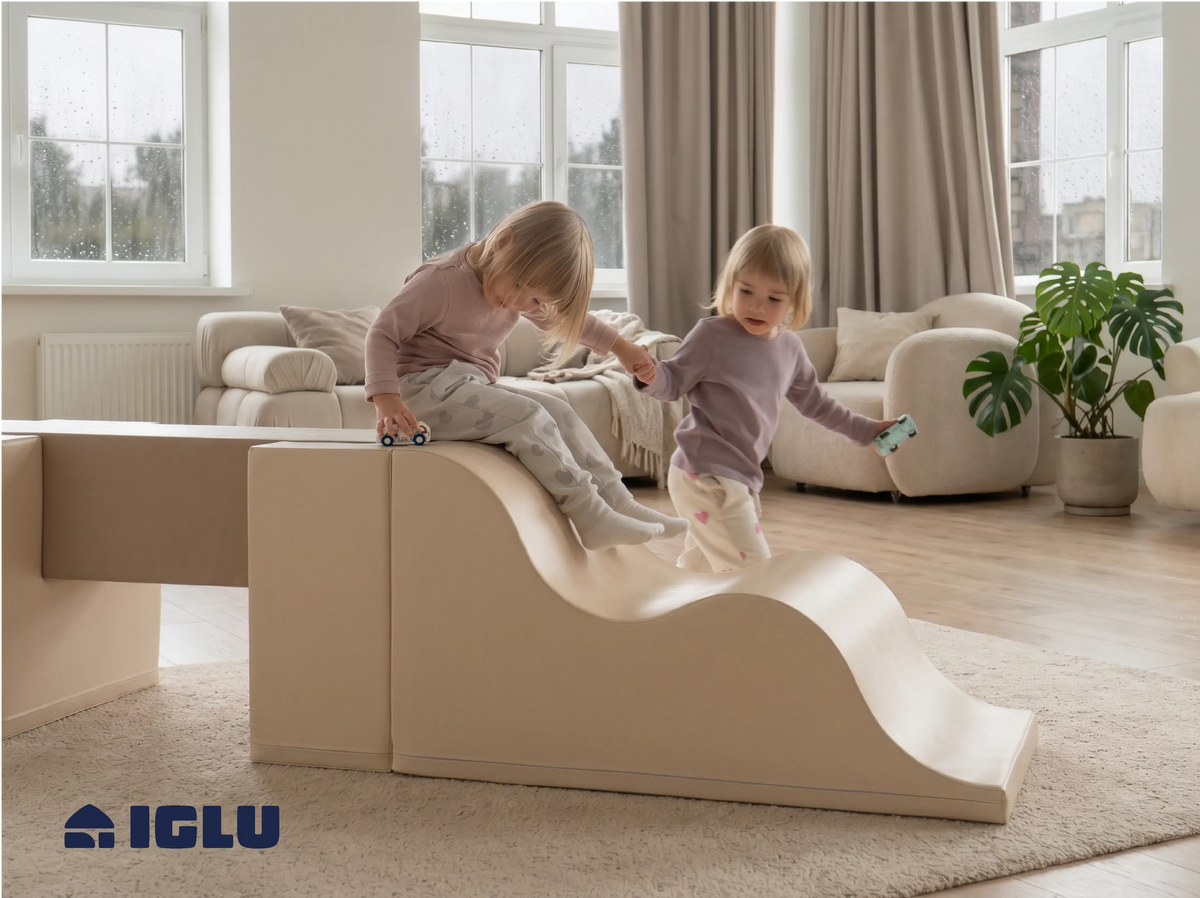
Winter drags on for us grown-ups, and for kids it feels even longer. They need to jump, climb and crawl, but when it’s dark by four, heading outdoors every afternoon isn’t always possible. So the challenge lands on parents: how do you meet that need for movement indoors, without the house getting turned upside down?
The good news is that children's needs haven't changed much since we were young. They still have to climb, crawl, and jump. What parents can change is how much room we make for movement at home.
To find out how, we asked Sandra Kraukle, a certified physiotherapist at the Children’s Clinical University Hospital in Latvia, a soft play ambassador and a mum of two.
Restless kids need more movement, not more regulation.
Children need movement and sensory input in order to regulate, says Sandra Kraukle. Restlessness, impulsivity, emotional blowups, constant fidgeting: these are common signs that a child's body needs more input, not stricter correction.
That idea also fits broader research on play and child development. In a clinical report, pediatricians call play "brain-building" and link it to better focus, self-control, and resilience to stress. The UK medical office recommends that children aged one to five be active for at least 180 minutes a day, spread throughout the day.
Now, three hours of active movement sounds like a lot, especially during winter. The good news is you can do most of it in your living room through play, no matter how short the days are or how hard it is raining outside.
So before getting into specific ideas, it helps to cut yourself some slack for the pressure we feel to be the “perfect parents”. As Martin Luther King Jr. said:
"If you can't fly then run, if you can't run then walk, if you can't walk then crawl, but whatever you do you have to keep moving forward." For kids, that is quite a literal description, right?
That said, here are tips from a certified child physiotherapist to help you make the indoor months a bit less of a slog for your kids.
Child physiotherapist tips on how to keep kids active indoors
Turn the living room into an imaginary obstacle course
Chairs, blankets and cushions are enough. Climb over, crawl under, roll across, jump on or off. Better still, let your child imagine and design the route, but supervise their safety. Every climb, crawl, and roll builds strength, balance, and coordination, says physiotherapist Sandra Kraukle. However, if you feel tired in the afternoon, you don't need to build a full obstacle course for your kids. Crawling under the table or rolling on the rug for a few minutes also will do it for them. From there, you can invent other movement challenges, too.
Give them "heavy work"
Pushing, pulling and carrying things with a little weight, like pushing chairs, moving an apple tray or pulling the curtains open, gives the body strong feedback. Sandra explains that children find this kind of play calming. And it doesn’t always have to be play. Everyday chores such as carrying the laundry basket, unpacking the shopping or helping move the sofa cushions are important too. Small tasks add extra movement, teaches kids real skills and gives them a sense of belonging in the family.
Add balance challenges
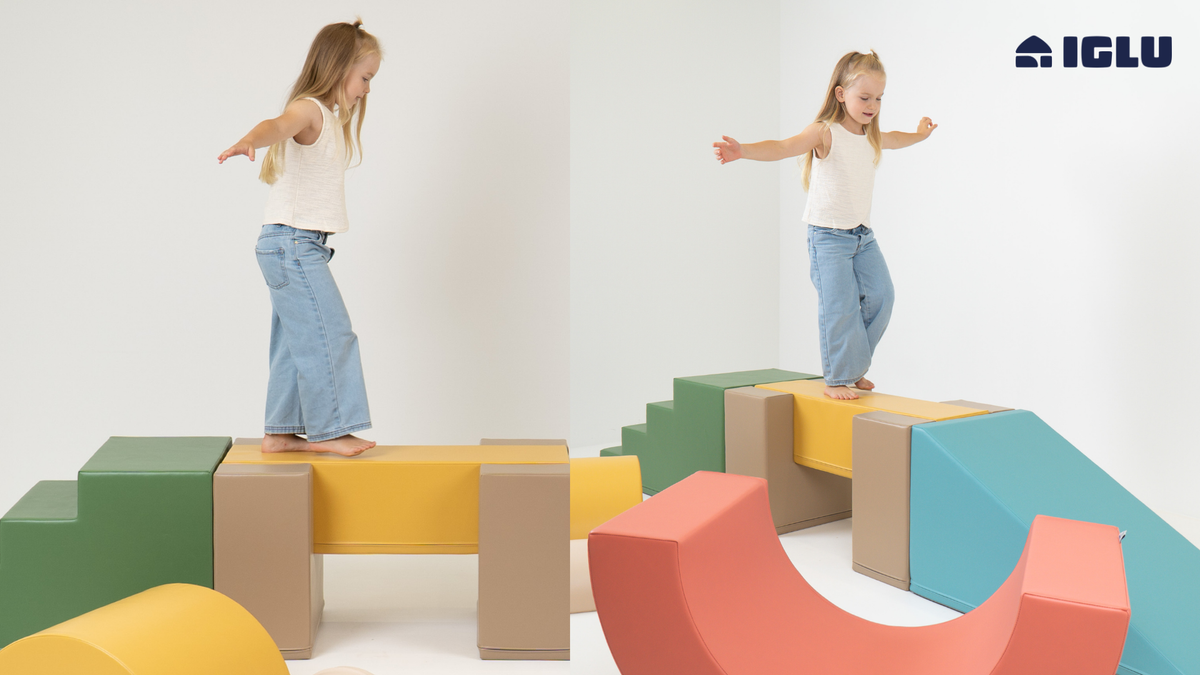
Another option is to add balance challenges. Tape a line on the floor and balance-walk on it, play "the floor is lava," and jump from cushion to cushion. Challenge your kid, who can balance on one leg the longest or crawl like a crab the furthest. These small challenges build the stability children rely on for everything - from running to sitting still at a table.
Start on the floor
For babies up to 18 months, strength begins with tummy time, rolling, reaching, and crawling. UK guidance recommends at least 30 minutes of tummy time a day for babies who aren't yet mobile, spread across the day. Physiotherapist Sandra says babies build strength when moving on the floor.
Let kids set the indoor play rules
Movement and imagination work best together in open-ended play. Build an imaginary city on the floor with toys your kids already have, then let them invent the characters, roles, and how the game works. You don't need to buy new toys every week. Some of the greatest growth and joy come when a child makes something up from mundane things.
Build movement into the daily routine
That same spirit can carry into daily routines, too. A toothbrushing dance in the morning, a random jump whenever you hear a certain keyword on the TV, even rapid eye blinks after the cartoon ends. Short bursts of activity all add up.
Keep it safe and soft
Indoor play must challenge your children without putting them at risk. A little wobbling and tumbling is part of how children learn what their bodies can do. Once the space feels safe, it becomes easier to support good play overall. Keep landings soft, match each challenge to your child's age and physical ability, move anything sharp or breakable out of the way, and keep an eye on them.
Good play needs a steady ground
There’s more to good play. Children need something to ground and focus on. That might be a steady routine that gives them a sense of security, a walk after lunch, or a regular time to play together. Also, a calm, supportive home environment where your child feels safe enough to explore. Give them space and time, set clear expectations, and don't overwhelm them with too many choices.
Now, do you feel more ready for indoor play?
Winter comes back every year, and your child will grow with each year. So, if you're choosing toys for indoor movement, choose things that change with them.
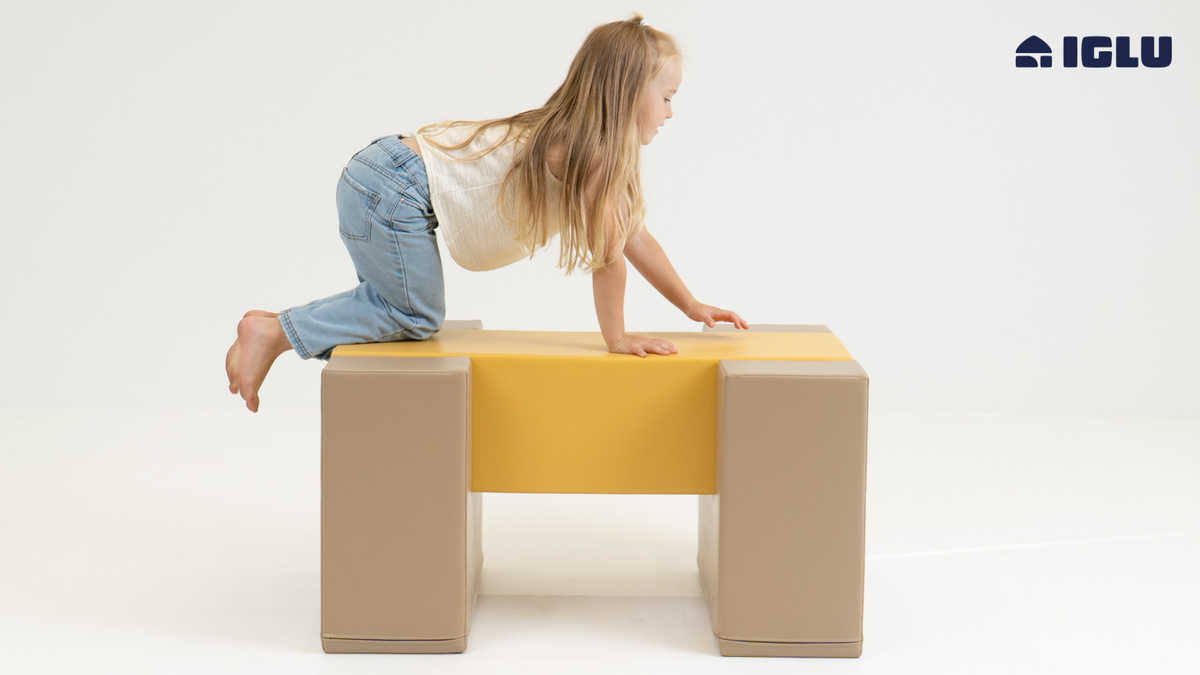
Active play never expires. A soft play block that challenges a crawling baby becomes a balance block for an older child. A soft block slide becomes a reading nook for parents. That makes the right play setup useful well beyond one season.
If you’re not just looking for ways to keep your kids busy this winter, but also want to build their strength, balance, and confidence for years to come, have a look at IGLU’s soft play sets. IGLU Soft play blocks support movement, independence, and confidence this winter and in the years that follow, for practically every generation in your home. They are simple, open-ended shapes children can climb, push, roll over, and reimagine.
Balance Play at Home: Physio-Approved Ideas for Kids