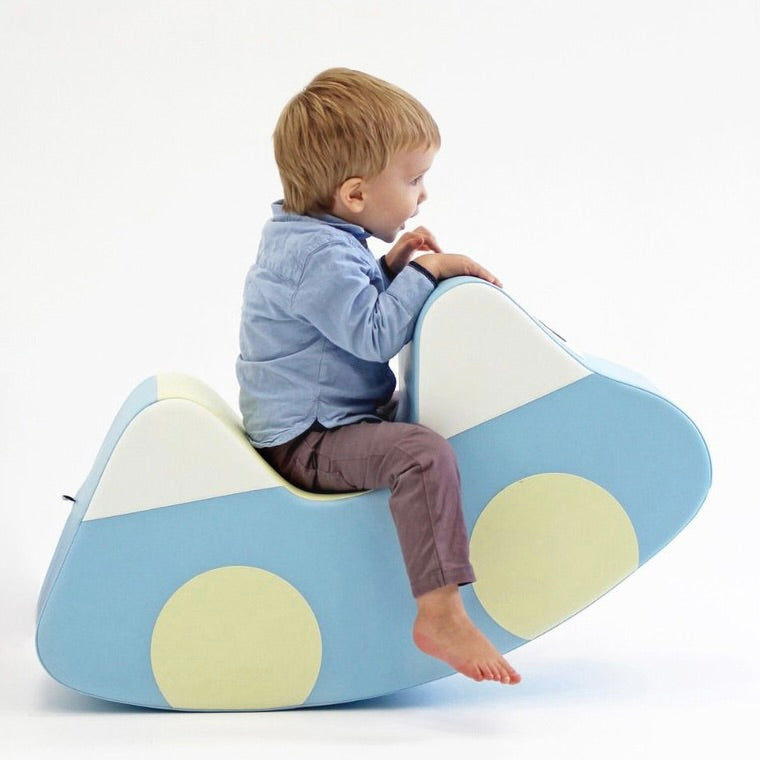






🧸 Safety: Soft blocks are designed to be safe for children to play with. They have padded surfaces and rounded edges, reducing the risk of injury during play.
💪 Fine and Gross Motor Skills: Building structures with soft blocks involves precise manipulation and coordination, which helps develop fine motor skills. Moving and arranging the blocks also promotes gross motor skills.
🎨 Creativity and Imagination: Soft blocks can be stacked, nested, and arranged in various ways, allowing children to create their own structures, obstacle courses, or imaginative play scenarios.
🤔 Problem-Solving: Building with soft blocks encourages problem-solving as children figure out how to balance blocks, create stable structures, and make their ideas come to life.
🔢 Math and Spatial Skills: Soft blocks introduce basic math concepts, such as size, shape, and proportion. Children learn about spatial relationships as they fit blocks together.
🎙️ Language Development: Playing with soft blocks often involves communication and collaboration with peers. Children discuss ideas, negotiate roles, and share experiences, enhancing their language skills.
🌈 Sensory Stimulation: Soft blocks come in different textures, colors, and sizes, providing sensory stimulation. Touching, squeezing, and manipulating the blocks contribute to sensory development.
😊 Emotional Expression: Soft blocks offer a safe outlet for emotional expression. Children can use them to express creativity, frustration, joy, or excitement.
🏃♂️ Physical Activity: Moving, stacking, and arranging soft blocks requires physical effort, contributing to children's physical activity levels and overall health.